
Library 01
OBD2 Codes & Scanners: Diagnose Your Check Engine Light
Every car sold in the United States since 1996 can tell you what is wrong with it. This guide shows you how to read the code, judge how serious it is and decide whether to fix it yourself or hand it to a shop.
Updated By CarTipsMentor Team
Free, with no account. You get the meaning, the usual causes and whether it is safe to keep driving.
01First steps
What to Do When Your Check Engine Light Comes On
The light cannot tell you whether the problem is a loose gas cap or a failing catalytic converter. The code can, and reading it takes about two minutes.
- 01
Scan
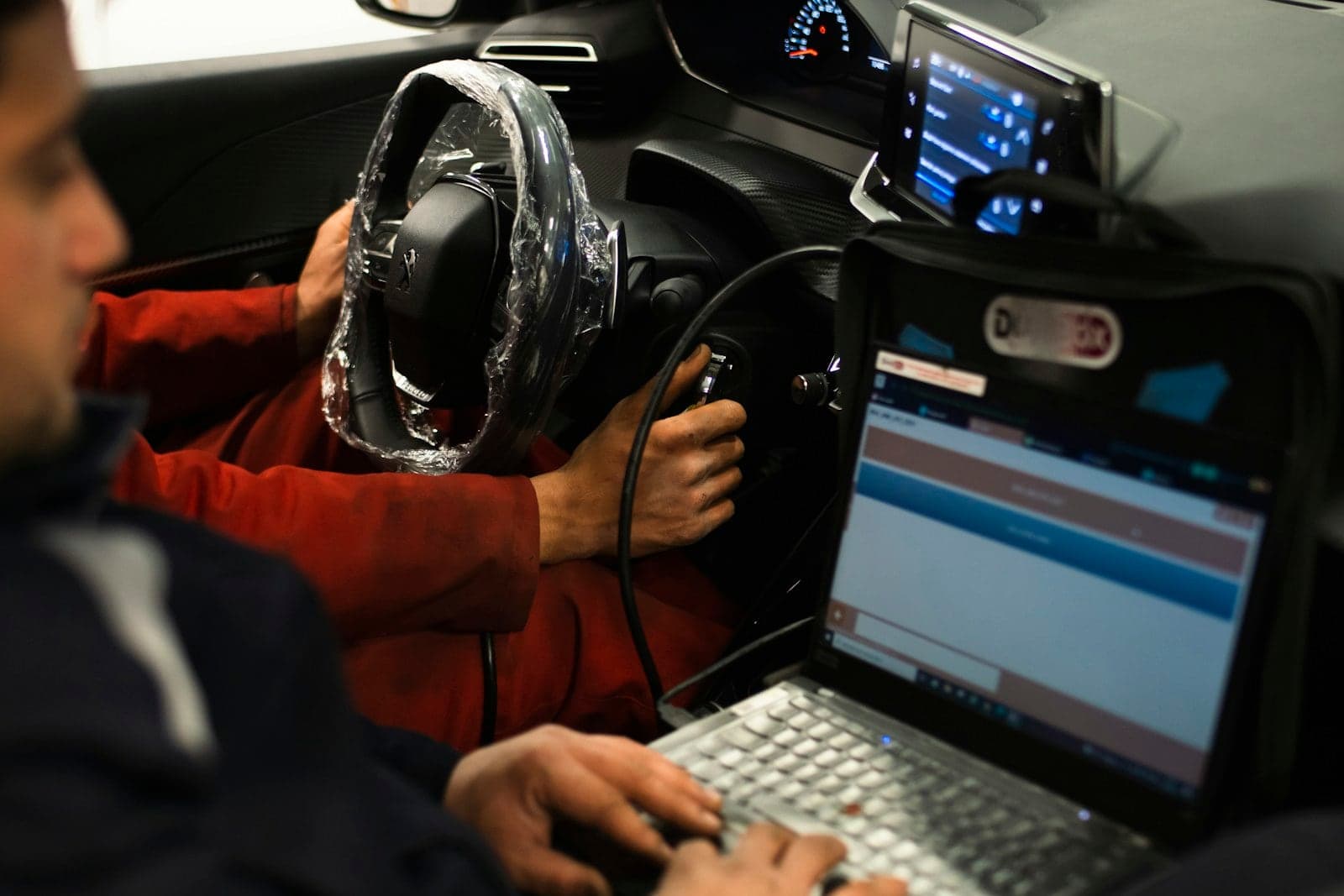
Plug a scanner into the 16-pin OBD2 port in the driver's footwell, below the steering wheel. Switch the ignition on and read the stored codes.
- 02
Look up
Enter the five-character code in the lookup above. You get its meaning, how serious it is and the usual causes in order of likelihood.
- 03
Decide
Cheap, common causes come first. Rule them out, then choose between a DIY repair and a shop based on the tools and access the job needs.
The check engine light means one thing: the engine computer has spotted a reading outside its normal range and saved a diagnostic trouble code to explain it. OBD2 has been required on gasoline cars and light trucks sold in the United States since the 1996 model year, and on diesels since 1997.[3] The port and the codes are standardized, which is why one inexpensive scanner works on almost any car.
02Scanners
Which OBD2 Scanner Do You Need?
Scanners differ in how many of the car's computers they can talk to, and whether they can only listen or also give commands. Buy for the problems you expect to have.
- Type 1
Basic code reader
Reads and clears engine codes and shows whether the emissions monitors are ready. Enough for most drivers: it answers why the light is on.
- Type 2
Bluetooth adapter
Sends the same codes, plus live sensor data, to an app on your phone. Check that the app supports your phone before you buy.
- Type 3
Handheld scan tool
Adds ABS, airbag and transmission codes, live data graphs and service resets. The right step up when more than one warning light is on.
- Type 4
Bidirectional scan tool
Commands parts such as fans, pumps and valves to operate, so you can prove a part has failed before you replace it.
If you only want the code read once, you may not need to buy anything. Many auto parts retailers offer a free scan,[1] and a basic reader pays for itself the first time it saves you a diagnostic fee.
For a named example of each type, with the maker’s published specifications, see our OBD2 scanner picks.
Go deeper: guides in this section
03Steady vs flashing
Steady vs Flashing Check Engine Light: Is It Safe to Drive?
How the light behaves tells you how much time you have. Steady is a request to investigate. Flashing is damage happening right now.
| What you see | What it means | Keep driving? |
|---|---|---|
| Steady light, car feels normal | A fault is stored but the engine is coping. Emissions and sensor faults are the usual cause. | Yes, for now. Read the code within a few days. |
| Steady light with rough running or lost power | The fault is affecting how the engine runs, often a misfire or a fuel or air metering problem. | Only as far as you need to. Drive gently and diagnose it today. |
| Flashing light | A severe misfire is sending raw fuel into the exhaust, which can destroy the catalytic converter. | No. Ease off, avoid high speeds and heavy loads, pull over when it is safe and have the car towed. |
| Check engine light plus a red oil or temperature light | The engine is short of oil pressure or is overheating. | No. Stop and switch the engine off immediately. |
A flashing light means a severe engine problem such as a misfire is occurring,[2] and unburned fuel reaching the exhaust can overheat and ruin the catalytic converter.[3] A light that comes on shortly after refueling, by contrast, is very often the gas cap. Tighten it until it clicks and give it a few days of normal driving. The system rechecks itself and switches the light off if the leak has gone.
Go deeper: guides in this section
- Flashing Check Engine Light: Causes & Is It Safe to Drive?
- Check Engine Light On: What It Means & What to Do
- Can You Drive With the Check Engine Light On?
- Loose Gas Cap Check Engine Light: How Long to Reset
- How Much Does a Check Engine Light Diagnostic Cost?
- Free Check Engine Light Scan: Where to Get One
04Common codes and costs
Most Common OBD2 Codes & Repair Costs
The same handful of repairs account for a large share of check engine lights. These are the ten most common in the United States, and what each cost on average in 2025.
- Average check engine light repair in 2025, the highest CarMD has recorded[1]
- $554
- of that average was parts
- $332
- of that average was labor
- $222
| Repair | Codes that often lead to it | Average cost | Share of repairs |
|---|---|---|---|
| Catalytic converter | P0420, P0430 | $1,511 | 7.4% |
| Oxygen sensor | P0130 to P0167, such as P0135 and P0141 | $287 | 6.7% |
| Ignition coils and spark plugs | P0300 to P0308, P0351 to P0358 | $480 | 6.0% |
| Mass air flow sensor | P0100 to P0104, often with P0171 | $346 | 5.8% |
| Ignition coils | P0351 to P0358, P0301 to P0308 | $256 | 5.0% |
| EVAP purge control valve | P0441, P0443, P0496 | $172 | 4.9% |
| Fuel injectors | P0201 to P0208, P0300 | $572 | 2.8% |
| ABS wheel speed sensor | C0035 to C0050 | $314 | 2.7% |
| Thermostat | P0128 | $324 | 2.4% |
| Spark plugs | P0300 to P0308 | $299 | 1.8% |
Go deeper: guides in this section
- P0420 Code: Catalyst System Efficiency Below Threshold - Causes & Fixes
- P0300 Code: Random/Multiple Cylinder Misfire Detected - Causes & Fixes
- P0171 Code: System Too Lean - Causes & Fixes
- P0430 Code: Catalyst System Efficiency Below Threshold - Causes & Fixes
- P0455 Code: Evaporative Emission System Leak Detected (large leak) - Causes & Fixes
- P0456 Code: Evaporative Emission System Leak Detected (very small leak) - Causes & Fixes
- P0128 Code: Coolant Thermostat (Coolant Temperature Below Thermostat Regulating Temperature) - Causes & Fixes
- How Long Can You Drive With a P0420 Code?
- P0301 Code: Cylinder 1 Misfire Detected - Causes & Fixes
- P0174 Code: System Too Lean - Causes & Fixes
- P0442 Code: Evaporative Emission System Leak Detected (small leak) - Causes & Fixes
- P0401 Code: Exhaust Gas Recirculation Flow Insufficient Detected - Causes & Fixes
- P0101 Code: Mass or Volume Air Flow Circuit Range/Performance - Causes & Fixes
- P0135 Code: O2 Sensor Heater Circuit - Causes & Fixes
- P0016 Code: Crankshaft Position - Camshaft Position Correlation - Causes & Fixes
- U0100 Code: Lost Communication With ECM/PCM A - Causes & Fixes
- Misfire Codes P0300–P0312 Explained
- Catalytic Converter Codes P0420 & P0430 Explained
- Lean Codes P0171 & P0174: Causes & Fixes
- EVAP Codes Explained: Small vs Large Leak
05Code types
OBD2 Code Lists by Type
Every OBD2 code has five characters, and each one narrows the fault down. Learn the pattern once and an unfamiliar code stops being a mystery.
- P
System
P is powertrain. B is body, C is chassis and U is network.
- 0
Origin
0 is a generic code that means the same on every make. 1 is manufacturer-specific.
- 4
Area
The subsystem. In powertrain codes, 4 is auxiliary emission controls.
- 20
Fault
The specific fault within that area.
That is P0420 taken apart. The definitions come from an industry standard, SAE J2012,[4] which is why the generic codes read the same on a Ford and a Toyota.
- P0xxx
Generic powertrain
Engine, transmission and emissions faults defined by the standard.
- P1xxx
Manufacturer powertrain
Powertrain faults each carmaker defines for itself. You need the make to interpret them.
- P2xxx
Generic powertrain, extended
A second block of standard codes for fuel and air metering, throttle control and newer emission systems.
- P3xxx
Mixed powertrain
Part manufacturer-specific and part generic, including cylinder deactivation faults.
- Uxxxx
Network
Communication faults between the car's computers. Low battery voltage and wiring are common causes.
- Bxxxx
Body
Airbags, seat belts, climate control, lighting and other cabin systems.
- Cxxxx
Chassis
ABS, traction control, steering and suspension. Wheel speed sensors account for many of them.
- Any code
Look it up
Enter a code to see its meaning, severity and likely causes.
Open the lookup
Go deeper: guides in this section
06All codes
OBD2 Code List: Codes and Their Meanings
314 of the most common generic codes with their standard descriptions. Search by code or by keyword, or filter by system.
Showing 314 of 314 codes
| Code | Description | System |
|---|---|---|
| P0001 | Fuel Volume Regulator Control Circuit/Open | Fuel and air |
| P0002 | Fuel Volume Regulator Control Circuit Range/Performance | Fuel and air |
| P0003 | Fuel Volume Regulator Control Circuit Low | Fuel and air |
| P0004 | Fuel Volume Regulator Control Circuit High | Fuel and air |
| P0005 | Fuel Shutoff Valve “A” Control Circuit/Open | Fuel and air |
| P0010 | “A” Camshaft Position Actuator Circuit (Bank 1) | Fuel and air |
| P0011 | “A” Camshaft Position: Timing Over-Advanced or System Performance (Bank 1) | Fuel and air |
| P0012 | “A” Camshaft Position: Timing Over-Retarded (Bank 1) | Fuel and air |
| P0013 | “B” Camshaft Position Actuator Circuit (Bank 1) | Fuel and air |
| P0014 | “B” Camshaft Position: Timing Over-Advanced or System Performance (Bank 1) | Fuel and air |
| P0015 | “B” Camshaft Position: Timing Over-Retarded (Bank 1) | Fuel and air |
| P0016 | Crankshaft Position – Camshaft Position Correlation (Bank 1 Sensor A) | Fuel and air |
| P0017 | Crankshaft Position – Camshaft Position Correlation (Bank 1 Sensor B) | Fuel and air |
| P0018 | Crankshaft Position – Camshaft Position Correlation (Bank 2 Sensor A) | Fuel and air |
| P0019 | Crankshaft Position – Camshaft Position Correlation (Bank 2 Sensor B) | Fuel and air |
| P0020 | “A” Camshaft Position Actuator Circuit (Bank 2) | Fuel and air |
| P0021 | “A” Camshaft Position: Timing Over-Advanced or System Performance (Bank 2) | Fuel and air |
| P0022 | “A” Camshaft Position: Timing Over-Retarded (Bank 2) | Fuel and air |
| P0030 | HO2S Heater Control Circuit (Bank 1 Sensor 1) | Fuel and air |
| P0031 | HO2S Heater Control Circuit Low (Bank 1 Sensor 1) | Fuel and air |
| P0032 | HO2S Heater Control Circuit High (Bank 1 Sensor 1) | Fuel and air |
| P0036 | HO2S Heater Control Circuit (Bank 1 Sensor 2) | Fuel and air |
| P0037 | HO2S Heater Control Circuit Low (Bank 1 Sensor 2) | Fuel and air |
| P0038 | HO2S Heater Control Circuit High (Bank 1 Sensor 2) | Fuel and air |
| P0050 | HO2S Heater Control Circuit (Bank 2 Sensor 1) | Fuel and air |
| P0051 | HO2S Heater Control Circuit Low (Bank 2 Sensor 1) | Fuel and air |
| P0052 | HO2S Heater Control Circuit High (Bank 2 Sensor 1) | Fuel and air |
| P0056 | HO2S Heater Control Circuit (Bank 2 Sensor 2) | Fuel and air |
| P0057 | HO2S Heater Control Circuit Low (Bank 2 Sensor 2) | Fuel and air |
| P0058 | HO2S Heater Control Circuit High (Bank 2 Sensor 2) | Fuel and air |
| P0068 | MAP/MAF – Throttle Position Correlation | Fuel and air |
| P0087 | Fuel Rail/System Pressure Too Low | Fuel and air |
| P0088 | Fuel Rail/System Pressure Too High | Fuel and air |
| P0089 | Fuel Pressure Regulator 1 Performance | Fuel and air |
| P0100 | Mass or Volume Air Flow “A” Circuit | Fuel and air |
| P0101 | Mass or Volume Air Flow “A” Circuit Range/Performance | Fuel and air |
| P0102 | Mass or Volume Air Flow “A” Circuit Low | Fuel and air |
| P0103 | Mass or Volume Air Flow “A” Circuit High | Fuel and air |
| P0104 | Mass or Volume Air Flow “A” Circuit Intermittent | Fuel and air |
| P0105 | Manifold Absolute Pressure/Barometric Pressure Circuit | Fuel and air |
| P0106 | Manifold Absolute Pressure/Barometric Pressure Circuit Range/Performance | Fuel and air |
| P0107 | Manifold Absolute Pressure/Barometric Pressure Circuit Low | Fuel and air |
| P0108 | Manifold Absolute Pressure/Barometric Pressure Circuit High | Fuel and air |
| P0110 | Intake Air Temperature Sensor 1 Circuit | Fuel and air |
| P0111 | Intake Air Temperature Sensor 1 Circuit Range/Performance | Fuel and air |
| P0112 | Intake Air Temperature Sensor 1 Circuit Low | Fuel and air |
| P0113 | Intake Air Temperature Sensor 1 Circuit High | Fuel and air |
| P0115 | Engine Coolant Temperature Sensor 1 Circuit | Fuel and air |
| P0116 | Engine Coolant Temperature Sensor 1 Circuit Range/Performance | Fuel and air |
| P0117 | Engine Coolant Temperature Sensor 1 Circuit Low | Fuel and air |
| P0118 | Engine Coolant Temperature Sensor 1 Circuit High | Fuel and air |
| P0119 | Engine Coolant Temperature Sensor 1 Circuit Intermittent | Fuel and air |
| P0120 | Throttle/Pedal Position Sensor/Switch “A” Circuit | Fuel and air |
| P0121 | Throttle/Pedal Position Sensor/Switch “A” Circuit Range/Performance | Fuel and air |
| P0122 | Throttle/Pedal Position Sensor/Switch “A” Circuit Low | Fuel and air |
| P0123 | Throttle/Pedal Position Sensor/Switch “A” Circuit High | Fuel and air |
| P0125 | Insufficient Coolant Temperature for Closed Loop Fuel Control | Fuel and air |
| P0128 | Coolant Thermostat (Coolant Temperature Below Thermostat Regulating Temperature) | Fuel and air |
| P0130 | O2 Sensor Circuit (Bank 1 Sensor 1) | Fuel and air |
| P0131 | O2 Sensor Circuit Low Voltage (Bank 1 Sensor 1) | Fuel and air |
| P0132 | O2 Sensor Circuit High Voltage (Bank 1 Sensor 1) | Fuel and air |
| P0133 | O2 Sensor Circuit Slow Response (Bank 1 Sensor 1) | Fuel and air |
| P0134 | O2 Sensor Circuit No Activity Detected (Bank 1 Sensor 1) | Fuel and air |
| P0135 | O2 Sensor Heater Circuit (Bank 1 Sensor 1) | Fuel and air |
| P0136 | O2 Sensor Circuit (Bank 1 Sensor 2) | Fuel and air |
| P0137 | O2 Sensor Circuit Low Voltage (Bank 1 Sensor 2) | Fuel and air |
| P0138 | O2 Sensor Circuit High Voltage (Bank 1 Sensor 2) | Fuel and air |
| P0139 | O2 Sensor Circuit Slow Response (Bank 1 Sensor 2) | Fuel and air |
| P0140 | O2 Sensor Circuit No Activity Detected (Bank 1 Sensor 2) | Fuel and air |
| P0141 | O2 Sensor Heater Circuit (Bank 1 Sensor 2) | Fuel and air |
| P0150 | O2 Sensor Circuit (Bank 2 Sensor 1) | Fuel and air |
| P0151 | O2 Sensor Circuit Low Voltage (Bank 2 Sensor 1) | Fuel and air |
| P0152 | O2 Sensor Circuit High Voltage (Bank 2 Sensor 1) | Fuel and air |
| P0153 | O2 Sensor Circuit Slow Response (Bank 2 Sensor 1) | Fuel and air |
| P0154 | O2 Sensor Circuit No Activity Detected (Bank 2 Sensor 1) | Fuel and air |
| P0155 | O2 Sensor Heater Circuit (Bank 2 Sensor 1) | Fuel and air |
| P0156 | O2 Sensor Circuit (Bank 2 Sensor 2) | Fuel and air |
| P0157 | O2 Sensor Circuit Low Voltage (Bank 2 Sensor 2) | Fuel and air |
| P0158 | O2 Sensor Circuit High Voltage (Bank 2 Sensor 2) | Fuel and air |
| P0159 | O2 Sensor Circuit Slow Response (Bank 2 Sensor 2) | Fuel and air |
| P0160 | O2 Sensor Circuit No Activity Detected (Bank 2 Sensor 2) | Fuel and air |
| P0161 | O2 Sensor Heater Circuit (Bank 2 Sensor 2) | Fuel and air |
| P0170 | Fuel Trim (Bank 1) | Fuel and air |
| P0171 | System Too Lean (Bank 1) | Fuel and air |
| P0172 | System Too Rich (Bank 1) | Fuel and air |
| P0173 | Fuel Trim (Bank 2) | Fuel and air |
| P0174 | System Too Lean (Bank 2) | Fuel and air |
| P0175 | System Too Rich (Bank 2) | Fuel and air |
| P0190 | Fuel Rail Pressure Sensor “A” Circuit | Fuel and air |
| P0191 | Fuel Rail Pressure Sensor “A” Circuit Range/Performance | Fuel and air |
| P0192 | Fuel Rail Pressure Sensor “A” Circuit Low | Fuel and air |
| P0193 | Fuel Rail Pressure Sensor “A” Circuit High | Fuel and air |
| P0200 | Injector Circuit/Open | Fuel and air |
| P0201 | Injector Circuit/Open: Cylinder 1 | Fuel and air |
| P0202 | Injector Circuit/Open: Cylinder 2 | Fuel and air |
| P0203 | Injector Circuit/Open: Cylinder 3 | Fuel and air |
| P0204 | Injector Circuit/Open: Cylinder 4 | Fuel and air |
| P0205 | Injector Circuit/Open: Cylinder 5 | Fuel and air |
| P0206 | Injector Circuit/Open: Cylinder 6 | Fuel and air |
| P0207 | Injector Circuit/Open: Cylinder 7 | Fuel and air |
| P0208 | Injector Circuit/Open: Cylinder 8 | Fuel and air |
| P0217 | Engine Coolant Over Temperature Condition | Fuel and air |
| P0218 | Transmission Fluid Over Temperature Condition | Fuel and air |
| P0219 | Engine Overspeed Condition | Fuel and air |
| P0220 | Throttle/Pedal Position Sensor/Switch “B” Circuit | Fuel and air |
| P0221 | Throttle/Pedal Position Sensor/Switch “B” Circuit Range/Performance | Fuel and air |
| P0222 | Throttle/Pedal Position Sensor/Switch “B” Circuit Low | Fuel and air |
| P0223 | Throttle/Pedal Position Sensor/Switch “B” Circuit High | Fuel and air |
| P0230 | Fuel Pump Primary Circuit | Fuel and air |
| P0231 | Fuel Pump Secondary Circuit Low | Fuel and air |
| P0232 | Fuel Pump Secondary Circuit High | Fuel and air |
| P0234 | Turbocharger/Supercharger “A” Overboost Condition | Fuel and air |
| P0299 | Turbocharger/Supercharger “A” Underboost Condition | Fuel and air |
| P0300 | Random/Multiple Cylinder Misfire Detected | Ignition and misfire |
| P0301 | Cylinder 1 Misfire Detected | Ignition and misfire |
| P0302 | Cylinder 2 Misfire Detected | Ignition and misfire |
| P0303 | Cylinder 3 Misfire Detected | Ignition and misfire |
| P0304 | Cylinder 4 Misfire Detected | Ignition and misfire |
| P0305 | Cylinder 5 Misfire Detected | Ignition and misfire |
| P0306 | Cylinder 6 Misfire Detected | Ignition and misfire |
| P0307 | Cylinder 7 Misfire Detected | Ignition and misfire |
| P0308 | Cylinder 8 Misfire Detected | Ignition and misfire |
| P0313 | Misfire Detected With Low Fuel | Ignition and misfire |
| P0315 | Crankshaft Position System Variation Not Learned | Ignition and misfire |
| P0320 | Ignition/Distributor Engine Speed Input Circuit | Ignition and misfire |
| P0325 | Knock Sensor 1 Circuit (Bank 1 or Single Sensor) | Ignition and misfire |
| P0326 | Knock Sensor 1 Circuit Range/Performance (Bank 1 or Single Sensor) | Ignition and misfire |
| P0327 | Knock Sensor 1 Circuit Low (Bank 1 or Single Sensor) | Ignition and misfire |
| P0328 | Knock Sensor 1 Circuit High (Bank 1 or Single Sensor) | Ignition and misfire |
| P0330 | Knock Sensor 2 Circuit (Bank 2) | Ignition and misfire |
| P0332 | Knock Sensor 2 Circuit Low (Bank 2) | Ignition and misfire |
| P0333 | Knock Sensor 2 Circuit High (Bank 2) | Ignition and misfire |
| P0335 | Crankshaft Position Sensor “A” Circuit | Ignition and misfire |
| P0336 | Crankshaft Position Sensor “A” Circuit Range/Performance | Ignition and misfire |
| P0337 | Crankshaft Position Sensor “A” Circuit Low | Ignition and misfire |
| P0338 | Crankshaft Position Sensor “A” Circuit High | Ignition and misfire |
| P0339 | Crankshaft Position Sensor “A” Circuit Intermittent | Ignition and misfire |
| P0340 | Camshaft Position Sensor “A” Circuit (Bank 1 or Single Sensor) | Ignition and misfire |
| P0341 | Camshaft Position Sensor “A” Circuit Range/Performance (Bank 1 or Single Sensor) | Ignition and misfire |
| P0342 | Camshaft Position Sensor “A” Circuit Low (Bank 1 or Single Sensor) | Ignition and misfire |
| P0343 | Camshaft Position Sensor “A” Circuit High (Bank 1 or Single Sensor) | Ignition and misfire |
| P0344 | Camshaft Position Sensor “A” Circuit Intermittent (Bank 1 or Single Sensor) | Ignition and misfire |
| P0345 | Camshaft Position Sensor “A” Circuit (Bank 2) | Ignition and misfire |
| P0346 | Camshaft Position Sensor “A” Circuit Range/Performance (Bank 2) | Ignition and misfire |
| P0350 | Ignition Coil Primary/Secondary Circuit | Ignition and misfire |
| P0351 | Ignition Coil “A” Primary/Secondary Circuit | Ignition and misfire |
| P0352 | Ignition Coil “B” Primary/Secondary Circuit | Ignition and misfire |
| P0353 | Ignition Coil “C” Primary/Secondary Circuit | Ignition and misfire |
| P0354 | Ignition Coil “D” Primary/Secondary Circuit | Ignition and misfire |
| P0355 | Ignition Coil “E” Primary/Secondary Circuit | Ignition and misfire |
| P0356 | Ignition Coil “F” Primary/Secondary Circuit | Ignition and misfire |
| P0357 | Ignition Coil “G” Primary/Secondary Circuit | Ignition and misfire |
| P0358 | Ignition Coil “H” Primary/Secondary Circuit | Ignition and misfire |
| P0365 | Camshaft Position Sensor “B” Circuit (Bank 1) | Ignition and misfire |
| P0366 | Camshaft Position Sensor “B” Circuit Range/Performance (Bank 1) | Ignition and misfire |
| P0400 | Exhaust Gas Recirculation Flow | Emissions |
| P0401 | Exhaust Gas Recirculation Flow Insufficient Detected | Emissions |
| P0402 | Exhaust Gas Recirculation Flow Excessive Detected | Emissions |
| P0403 | Exhaust Gas Recirculation Control Circuit | Emissions |
| P0404 | Exhaust Gas Recirculation Control Circuit Range/Performance | Emissions |
| P0405 | Exhaust Gas Recirculation Sensor “A” Circuit Low | Emissions |
| P0406 | Exhaust Gas Recirculation Sensor “A” Circuit High | Emissions |
| P0410 | Secondary Air Injection System | Emissions |
| P0411 | Secondary Air Injection System Incorrect Flow Detected | Emissions |
| P0420 | Catalyst System Efficiency Below Threshold (Bank 1) | Emissions |
| P0421 | Warm Up Catalyst Efficiency Below Threshold (Bank 1) | Emissions |
| P0430 | Catalyst System Efficiency Below Threshold (Bank 2) | Emissions |
| P0431 | Warm Up Catalyst Efficiency Below Threshold (Bank 2) | Emissions |
| P0440 | Evaporative Emission System | Emissions |
| P0441 | Evaporative Emission System Incorrect Purge Flow | Emissions |
| P0442 | Evaporative Emission System Leak Detected (Small Leak) | Emissions |
| P0443 | Evaporative Emission System Purge Control Valve Circuit | Emissions |
| P0446 | Evaporative Emission System Vent Control Circuit | Emissions |
| P0449 | Evaporative Emission System Vent Valve/Solenoid Circuit | Emissions |
| P0450 | Evaporative Emission System Pressure Sensor/Switch | Emissions |
| P0451 | Evaporative Emission System Pressure Sensor/Switch Range/Performance | Emissions |
| P0452 | Evaporative Emission System Pressure Sensor/Switch Low | Emissions |
| P0453 | Evaporative Emission System Pressure Sensor/Switch High | Emissions |
| P0455 | Evaporative Emission System Leak Detected (Large Leak) | Emissions |
| P0456 | Evaporative Emission System Leak Detected (Very Small Leak) | Emissions |
| P0457 | Evaporative Emission System Leak Detected (Fuel Cap Loose/Off) | Emissions |
| P0460 | Fuel Level Sensor “A” Circuit | Emissions |
| P0461 | Fuel Level Sensor “A” Circuit Range/Performance | Emissions |
| P0462 | Fuel Level Sensor “A” Circuit Low | Emissions |
| P0463 | Fuel Level Sensor “A” Circuit High | Emissions |
| P0480 | Fan 1 Control Circuit | Emissions |
| P0481 | Fan 2 Control Circuit | Emissions |
| P0496 | Evaporative Emission System High Purge Flow | Emissions |
| P0500 | Vehicle Speed Sensor “A” | Speed and idle |
| P0501 | Vehicle Speed Sensor “A” Range/Performance | Speed and idle |
| P0502 | Vehicle Speed Sensor “A” Circuit Low | Speed and idle |
| P0503 | Vehicle Speed Sensor “A” Intermittent/Erratic/High | Speed and idle |
| P0505 | Idle Air Control System | Speed and idle |
| P0506 | Idle Air Control System RPM Lower Than Expected | Speed and idle |
| P0507 | Idle Air Control System RPM Higher Than Expected | Speed and idle |
| P0520 | Engine Oil Pressure Sensor/Switch Circuit | Speed and idle |
| P0521 | Engine Oil Pressure Sensor/Switch Range/Performance | Speed and idle |
| P0522 | Engine Oil Pressure Sensor/Switch Low | Speed and idle |
| P0523 | Engine Oil Pressure Sensor/Switch High | Speed and idle |
| P0530 | A/C Refrigerant Pressure Sensor “A” Circuit | Speed and idle |
| P0532 | A/C Refrigerant Pressure Sensor “A” Circuit Low | Speed and idle |
| P0533 | A/C Refrigerant Pressure Sensor “A” Circuit High | Speed and idle |
| P0550 | Power Steering Pressure Sensor/Switch Circuit | Speed and idle |
| P0560 | System Voltage | Speed and idle |
| P0562 | System Voltage Low | Speed and idle |
| P0563 | System Voltage High | Speed and idle |
| P0571 | Brake Switch “A” Circuit | Speed and idle |
| P0600 | Serial Communication Link | Computer |
| P0601 | Internal Control Module Memory Check Sum Error | Computer |
| P0602 | Control Module Programming Error | Computer |
| P0603 | Internal Control Module Keep Alive Memory (KAM) Error | Computer |
| P0604 | Internal Control Module Random Access Memory (RAM) Error | Computer |
| P0605 | Internal Control Module Read Only Memory (ROM) Error | Computer |
| P0606 | Control Module Processor | Computer |
| P0620 | Generator Control Circuit | Computer |
| P0627 | Fuel Pump “A” Control Circuit/Open | Computer |
| P0630 | VIN Not Programmed or Incompatible: ECM/PCM | Computer |
| P0641 | Sensor Reference Voltage “A” Circuit/Open | Computer |
| P0650 | Malfunction Indicator Lamp (MIL) Control Circuit | Computer |
| P0651 | Sensor Reference Voltage “B” Circuit/Open | Computer |
| P0685 | ECM/PCM Power Relay Control Circuit/Open | Computer |
| P0700 | Transmission Control System (MIL Request) | Transmission |
| P0705 | Transmission Range Sensor “A” Circuit (PRNDL Input) | Transmission |
| P0706 | Transmission Range Sensor “A” Circuit Range/Performance | Transmission |
| P0710 | Transmission Fluid Temperature Sensor “A” Circuit | Transmission |
| P0711 | Transmission Fluid Temperature Sensor “A” Circuit Range/Performance | Transmission |
| P0712 | Transmission Fluid Temperature Sensor “A” Circuit Low | Transmission |
| P0713 | Transmission Fluid Temperature Sensor “A” Circuit High | Transmission |
| P0715 | Input/Turbine Speed Sensor “A” Circuit | Transmission |
| P0716 | Input/Turbine Speed Sensor “A” Circuit Range/Performance | Transmission |
| P0717 | Input/Turbine Speed Sensor “A” Circuit No Signal | Transmission |
| P0720 | Output Speed Sensor Circuit | Transmission |
| P0721 | Output Speed Sensor Circuit Range/Performance | Transmission |
| P0722 | Output Speed Sensor Circuit No Signal | Transmission |
| P0725 | Engine Speed Input Circuit | Transmission |
| P0729 | Gear 6 Incorrect Ratio | Transmission |
| P0730 | Incorrect Gear Ratio | Transmission |
| P0731 | Gear 1 Incorrect Ratio | Transmission |
| P0732 | Gear 2 Incorrect Ratio | Transmission |
| P0733 | Gear 3 Incorrect Ratio | Transmission |
| P0734 | Gear 4 Incorrect Ratio | Transmission |
| P0735 | Gear 5 Incorrect Ratio | Transmission |
| P0736 | Reverse Incorrect Ratio | Transmission |
| P0740 | Torque Converter Clutch Circuit/Open | Transmission |
| P0741 | Torque Converter Clutch Circuit Performance or Stuck Off | Transmission |
| P0742 | Torque Converter Clutch Circuit Stuck On | Transmission |
| P0743 | Torque Converter Clutch Circuit Electrical | Transmission |
| P0744 | Torque Converter Clutch Circuit Intermittent | Transmission |
| P0750 | Shift Solenoid “A” | Transmission |
| P0751 | Shift Solenoid “A” Performance or Stuck Off | Transmission |
| P0752 | Shift Solenoid “A” Stuck On | Transmission |
| P0753 | Shift Solenoid “A” Electrical | Transmission |
| P0755 | Shift Solenoid “B” | Transmission |
| P0756 | Shift Solenoid “B” Performance or Stuck Off | Transmission |
| P0757 | Shift Solenoid “B” Stuck On | Transmission |
| P0758 | Shift Solenoid “B” Electrical | Transmission |
| P0760 | Shift Solenoid “C” | Transmission |
| P0765 | Shift Solenoid “D” | Transmission |
| P0770 | Shift Solenoid “E” | Transmission |
| P0780 | Shift Error | Transmission |
| P0841 | Transmission Fluid Pressure Sensor/Switch “A” Circuit Range/Performance | Transmission |
| P0850 | Park/Neutral Switch Input Circuit | Transmission |
| P0868 | Transmission Fluid Pressure Low | Transmission |
| P0A80 | Replace Hybrid Battery Pack | Hybrid |
| P2096 | Post Catalyst Fuel Trim System Too Lean (Bank 1) | Fuel and air |
| P2097 | Post Catalyst Fuel Trim System Too Rich (Bank 1) | Fuel and air |
| P2098 | Post Catalyst Fuel Trim System Too Lean (Bank 2) | Fuel and air |
| P2099 | Post Catalyst Fuel Trim System Too Rich (Bank 2) | Fuel and air |
| P2101 | Throttle Actuator “A” Control Motor Circuit Range/Performance | Fuel and air |
| P2106 | Throttle Actuator Control System: Forced Limited Power | Fuel and air |
| P2111 | Throttle Actuator “A” Control System: Stuck Open | Fuel and air |
| P2112 | Throttle Actuator “A” Control System: Stuck Closed | Fuel and air |
| P2119 | Throttle Actuator “A” Control Throttle Body Range/Performance | Fuel and air |
| P2122 | Throttle/Pedal Position Sensor/Switch “D” Circuit Low | Fuel and air |
| P2127 | Throttle/Pedal Position Sensor/Switch “E” Circuit Low | Fuel and air |
| P2135 | Throttle/Pedal Position Sensor/Switch “A”/“B” Voltage Correlation | Fuel and air |
| P2138 | Throttle/Pedal Position Sensor/Switch “D”/“E” Voltage Correlation | Fuel and air |
| P2177 | System Too Lean Off Idle (Bank 1) | Fuel and air |
| P2178 | System Too Rich Off Idle (Bank 1) | Fuel and air |
| P2187 | System Too Lean at Idle (Bank 1) | Fuel and air |
| P2188 | System Too Rich at Idle (Bank 1) | Fuel and air |
| P2189 | System Too Lean at Idle (Bank 2) | Fuel and air |
| P2195 | O2 Sensor Signal Biased/Stuck Lean (Bank 1 Sensor 1) | Fuel and air |
| P2196 | O2 Sensor Signal Biased/Stuck Rich (Bank 1 Sensor 1) | Fuel and air |
| P2197 | O2 Sensor Signal Biased/Stuck Lean (Bank 2 Sensor 1) | Fuel and air |
| P2198 | O2 Sensor Signal Biased/Stuck Rich (Bank 2 Sensor 1) | Fuel and air |
| P2270 | O2 Sensor Signal Biased/Stuck Lean (Bank 1 Sensor 2) | Fuel and air |
| P2271 | O2 Sensor Signal Biased/Stuck Rich (Bank 1 Sensor 2) | Fuel and air |
| P2279 | Intake Air System Leak | Fuel and air |
| P2610 | ECM/PCM Engine Off Timer Performance | Fuel and air |
| P2646 | “A” Rocker Arm Actuator System Performance or Stuck Off (Bank 1) | Fuel and air |
| P2647 | “A” Rocker Arm Actuator System Stuck On (Bank 1) | Fuel and air |
| U0001 | High Speed CAN Communication Bus | Network |
| U0073 | Control Module Communication Bus “A” Off | Network |
| U0100 | Lost Communication With ECM/PCM “A” | Network |
| U0101 | Lost Communication With Transmission Control Module | Network |
| U0121 | Lost Communication With Anti-Lock Brake System (ABS) Control Module | Network |
| U0140 | Lost Communication With Body Control Module | Network |
| U0151 | Lost Communication With Restraints Control Module | Network |
| U0155 | Lost Communication With Instrument Panel Cluster Control Module | Network |
| U0164 | Lost Communication With HVAC Control Module | Network |
| U0401 | Invalid Data Received From ECM/PCM “A” | Network |
| U0402 | Invalid Data Received From Transmission Control Module | Network |
| U0415 | Invalid Data Received From Anti-Lock Brake System (ABS) Control Module | Network |
| U0422 | Invalid Data Received From Body Control Module | Network |
| C0035 | Left Front Wheel Speed Sensor Circuit | Chassis |
| C0040 | Right Front Wheel Speed Sensor Circuit | Chassis |
| C0045 | Left Rear Wheel Speed Sensor Circuit | Chassis |
| C0050 | Right Rear Wheel Speed Sensor Circuit | Chassis |
| B0001 | Driver Frontal Stage 1 Deployment Control | Body |
| B0002 | Driver Frontal Stage 2 Deployment Control | Body |
| B0010 | Passenger Frontal Stage 1 Deployment Control | Body |
| B0020 | Left Side Airbag Deployment Control | Body |
| B0028 | Right Side Airbag Deployment Control | Body |
Descriptions follow the SAE J2012 standard definitions.[4] Bank 1 is the side of the engine with cylinder 1. Sensor 1 sits before the catalytic converter and Sensor 2 after it. Manufacturer-specific codes such as P1xxx are not listed, because their meaning changes from one make to the next.
07Warning lights
Dashboard Warning Lights Explained
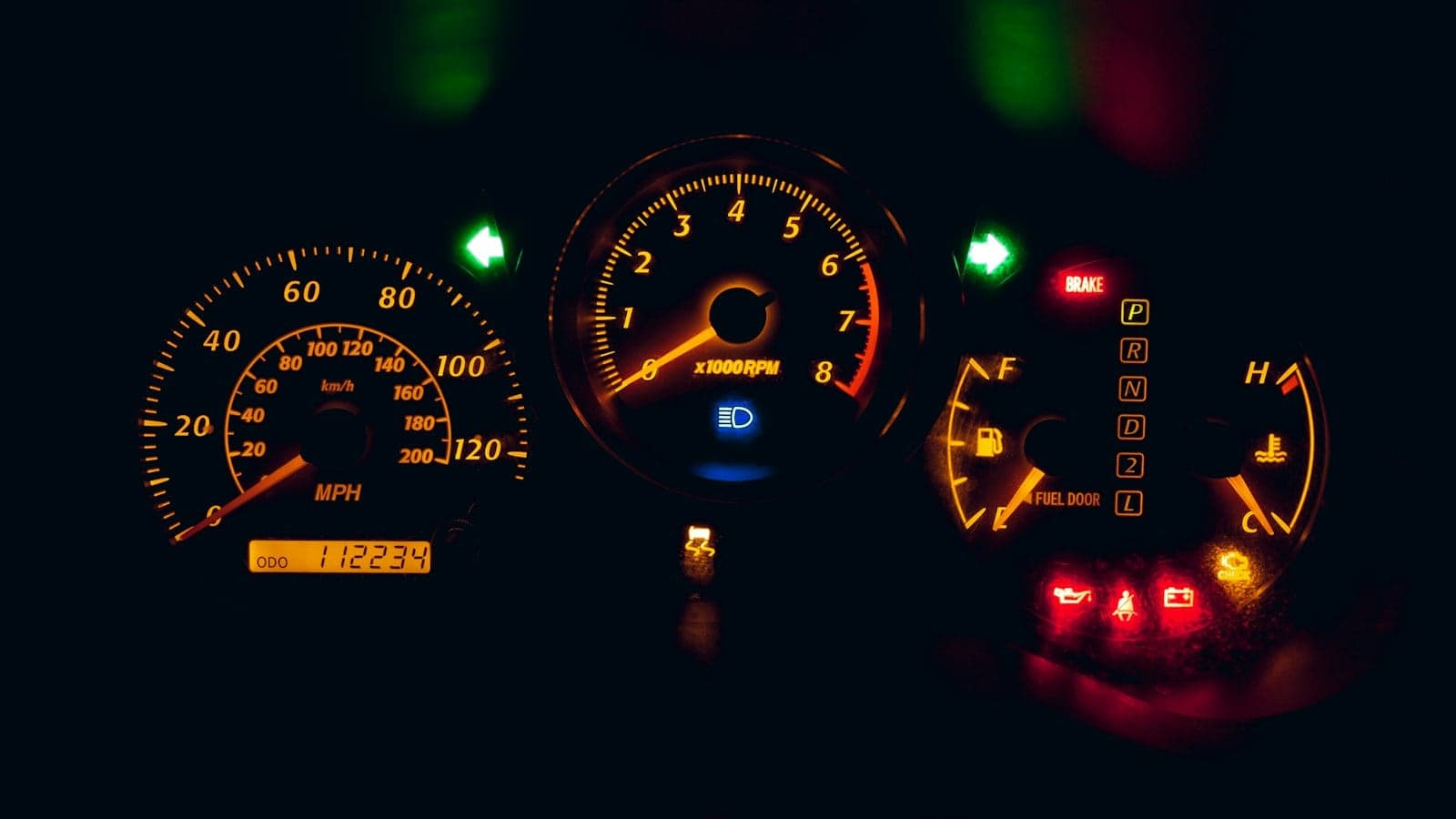
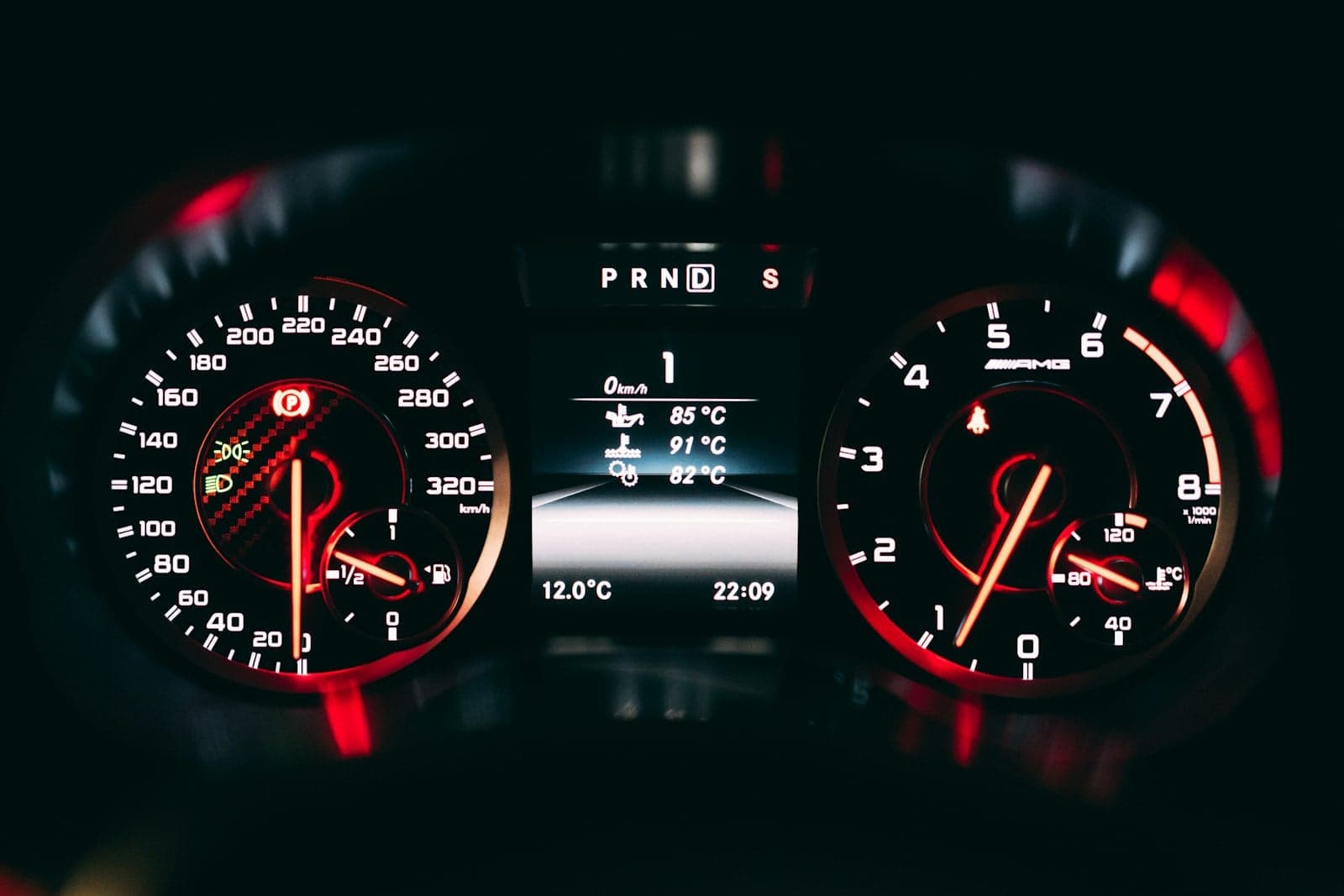
Color is the first thing to read. Red means stop as soon as it is safe. Amber means the car can be driven but needs attention soon.
- Amber
Check engine
Steady: check soon. Flashing: stop.
The engine computer has stored a fault code, anything from a loose gas cap to an active misfire.
Full guide - Red
Oil pressure
Stop the engine.
Oil pressure has dropped too low to protect the engine's moving parts.
- Red
Battery / charging
Limited time left.
The charging system has stopped charging, so the car is running on the battery alone.
- Red
Engine temperature
Stop and let it cool.
The engine is running hotter than it should and is at risk of overheating.
- Red
Brake system
Check before driving on.
The parking brake is on, the brake fluid is low or the braking system has a fault.
- Amber
ABS
Drive with care.
The anti-lock braking system has switched itself off because of a fault.
Full guide - Amber
Tire pressure
Check your tires today.
At least one tire is well below its recommended pressure.
Full guide - Red
Airbag
Have it repaired.
The airbag system has found a fault and may not protect you in a crash.
- Amber
Traction / stability control
Flashing is normal. Steady needs a check.
A flashing light means the system is working to stop wheelspin. A steady light means it has a fault or has been switched off.
Full guide - Red
Power steering
Steering will be heavy.
The power steering assist has failed or the fluid is low, so the wheel needs far more effort to turn.
Full guide - Red
Transmission temperature
Stop and let it cool.
The transmission fluid is hotter than it should be, usually from towing, steep climbs or low fluid.
- Amber
Powertrain fault / reduced power
Drive gently to a shop.
The engine or transmission computer has found a fault and may be limiting power to protect the drivetrain.
Full guide
08Failing sensors
Failing Sensors: Symptoms & Replacement Parts
Sensors rarely fail outright. They drift, and the engine computer compensates until it cannot. The first sign is usually how the car drives.
| Part | What you notice | Typical codes | Average repair |
|---|---|---|---|
| Oxygen sensor | Fuel economy drops, idle turns rough, the car fails an emissions test. | P0130 to P0167 | $287 |
| Mass air flow sensor | Hesitation, stalling, hard starting, lean running. Cleaning it sometimes cures the fault. | P0100 to P0104, P0171 | $346 |
| Ignition coil | Misfire under load, shaking at idle, a flashing check engine light. | P0351 to P0358, P0301 to P0308 | $256 |
| EVAP purge valve | Rough idle or hard starting just after refueling, sometimes a fuel smell. | P0441, P0443, P0496 | $172 |
| Crankshaft or camshaft position sensor | Stalling, cutting out when hot, long cranking or a no-start. | P0335 to P0339, P0340 to P0344 | Varies by engine |
| Catalytic converter | Loss of power, a rattle from under the car, a rotten-egg smell. | P0420, P0430 | $1,511 |
A catalytic converter usually dies because of something upstream: a misfire, an engine burning oil or a failed oxygen sensor left for too long. Fit a new converter without fixing the cause and the replacement fails the same way.
09DIY or mechanic
DIY Fix or Mechanic? Cost Comparison
Labor made up $222 of the $554 average check engine repair in 2025, about 40 percent of the bill. On the simpler jobs, that share is yours to keep.
| Repair | DIY difficulty | What you need | Shop average |
|---|---|---|---|
| Ignition coil | Easy on most engines. One bolt and a connector per coil. | Basic socket set | $256 |
| Mass air flow sensor | Easy. Two screws and a plug. Try cleaning it first. | Screwdriver, MAF sensor cleaner | $346 |
| Spark plugs | Easy to moderate. Harder where the rear plugs sit under the intake. | Spark plug socket, extension, torque wrench | $299 |
| EVAP purge valve | Easy to moderate, depending on where it is mounted. | Pliers, basic sockets | $172 |
| Oxygen sensor | Moderate. The threads often seize in the exhaust. | Oxygen sensor socket, penetrating oil | $287 |
| Thermostat | Moderate. The coolant has to be drained and the system bled of air. | Sockets, drain pan, the correct coolant | $324 |
| ABS wheel speed sensor | Moderate. Wheel off, and the bolt is usually corroded. | Jack stands, sockets, penetrating oil | $314 |
| Fuel injectors | Hard. Pressurized fuel, and high pressure on direct-injection engines. | Fuel line tools, new seals | $572 |
| Catalytic converter | Hard. Exhaust work, and the part must be legal for your state. | A lift, cutting or welding equipment | $1,511 |
Before paying for a diagnosis, know what it should cost. A basic diagnostic test starts at about $40,[5] a mechanic or dealer will usually charge around an hour of labor to find the fault, and some parts stores lend a code reader to use in the parking lot.[6]
Go deeper: guides in this section
10Questions
OBD2 Codes: Questions, Answered
What does OBD2 stand for?
OBD2 stands for On-Board Diagnostics, second generation. It is the standardized system a car uses to monitor its engine, transmission and emissions equipment and to report faults as five-character diagnostic trouble codes.
Where is the OBD2 port on my car?
The 16-pin port is in the driver's footwell, between the door and the center console and no higher than the bottom of the steering wheel. On some cars it sits behind a small cover that comes off by hand.
Is it safe to drive with the check engine light on?
A steady light is not an emergency, but have it checked promptly. A flashing light means a severe problem such as a misfire is happening, so limit driving, avoid high speeds and heavy loads, and get the car repaired as soon as possible.
How much does a check engine light repair cost?
The average check engine light repair in the United States cost $554 in 2025, made up of $332 in parts and $222 in labor, according to CarMD's 2026 Vehicle Health Index. Individual repairs ranged from about $172 for an EVAP purge valve to $1,511 for a catalytic converter.
Will the check engine light turn off by itself?
Yes, if the fault does not come back. The computer rechecks each system as you drive and normally switches the light off after several consecutive trouble-free drive cycles. The code stays in memory for some time afterwards, so a scanner can still read it.
Does clearing an OBD2 code fix the problem?
No. Clearing a code only erases the record of the fault, and the light returns if the cause is still there. It also resets the readiness monitors, so the car cannot pass an emissions test until you have driven enough for them to complete again.
Are OBD2 codes the same for every car?
Generic codes, the ones starting P0, P2 and most U0 codes, mean the same on every make. Manufacturer-specific codes such as P1 codes are defined by each carmaker, so the same number can mean different things on different brands.
What is the difference between a pending code and a stored code?
A pending code means the computer has seen a fault once and is waiting to see whether it happens again. If it repeats, the code becomes a stored or confirmed code and the check engine light comes on. Pending codes are an early warning worth checking.
11About this guide
Who wrote it, and how.
Written by
CarTipsMentor Team
Last updated .
How it is researched
Every figure in this guide comes from the sources listed below, and the guide is revised when they change.
Editorial policyGood to know
General information, not a diagnosis of your vehicle. Costs are national estimates that vary by vehicle, region and shop. Have a qualified mechanic inspect anything that affects safety.
Full disclaimerSources
- [1]CarMD, 2026 Vehicle Health Index (calendar-year 2025 repair data)
- [2]U.S. Environmental Protection Agency, What To Do With the Check Engine Light (EPA420-F-00-041)
- [3]California Air Resources Board, On-Board Diagnostic II (OBD II) Systems Fact Sheet
- [4]SAE International, J2012: Diagnostic Trouble Code Definitions
- [5]J.D. Power, What Is a Car Diagnostic Test?
- [6]Edmunds, What Your Check Engine Light Is Telling You
Keep going
The other four libraries.
 Used CarsCheck the history, inspect it properly, compare loans and negotiate the out-the-door price with a clear head.
 DetailingWash, decontaminate, correct and protect in the right order, and avoid the mistakes that mark paint.
 AccessoriesWhat is worth carrying in the car and what to look for in dash cams, jump starters, mounts and garage tools.
- MaintenanceService schedules by mileage, what each job really costs and the work you can safely do at home.