
Library 03
Car Detailing at Home: Products, Tools & Step-by-Step Guide
A proper detail is a sequence, not a product. Wash, decontaminate, correct, protect, then the interior, in that order. This guide walks through each stage, what it costs to do yourself and where a professional is worth paying for.
Updated By CarTipsMentor Team
The order that works
Skipping ahead is how swirl marks happen. Polish over dirt and you grind it into the paint.
01DIY vs pro cost
DIY vs Professional Detailing: Cost Comparison
A professional detail buys time and equipment. Doing it yourself buys the supplies once and reuses them every time after.
- Typical price of a full-service professional detail[1]
- $150–$500
- Typical price of a basic wash and wax[1]
- $50–$100
- Typical price of a professional ceramic coating[2]
- $500–$2,000
| Service | Paying a professional | Doing it yourself |
|---|---|---|
| Basic wash and wax | $50 to $100 | A shampoo, two buckets, a wash mitt and a wax, all of which last for many washes. |
| Full interior and exterior detail | $150 to $500, depending on the size and condition of the vehicle | The same kit plus clay, polish and interior cleaners, and most of a day for the first one. |
| Ceramic coating | $500 to $2,000 | A consumer coating kit costs roughly $25 to $130, but the paint must be corrected first. |
The gap is widest where labor is highest. A coating kit is cheap; the hours of washing, claying and polishing that go underneath it are what a professional charges for. If your paint is already in good condition, that preparation is something you can do at home.
Go deeper: guides in this section
02Detailing kit
Your Detailing Kit: What to Buy
You need fewer products than the shelves suggest. Spend on what touches the paint, because that is what causes or prevents scratches.
| Stage | What you need | What to look for |
|---|---|---|
| Wash | pH-neutral car shampoo, two buckets with grit guards, microfiber wash mitt, plush drying towel | A shampoo that will not strip wax. Avoid dish soap, which does. |
| Decontaminate | Clay bar or clay mitt with lubricant, iron remover spray | Fine-grade clay for a car that is washed regularly. Medium only for neglected paint. |
| Correct | Dual-action polisher, cutting and finishing pads, compound and polish | A dual-action machine is far more forgiving for a first-timer than a rotary. |
| Protect | Wax, paint sealant or a ceramic coating, plus applicator pads | Match the product to how often you are willing to reapply it. |
| Interior | Vacuum with crevice tools, all-purpose cleaner, soft brushes, glass cleaner, fabric or leather cleaner | Ammonia-free glass cleaner if your windows are tinted. |
03Step 1: Wash
Step 1: Wash the Right Way
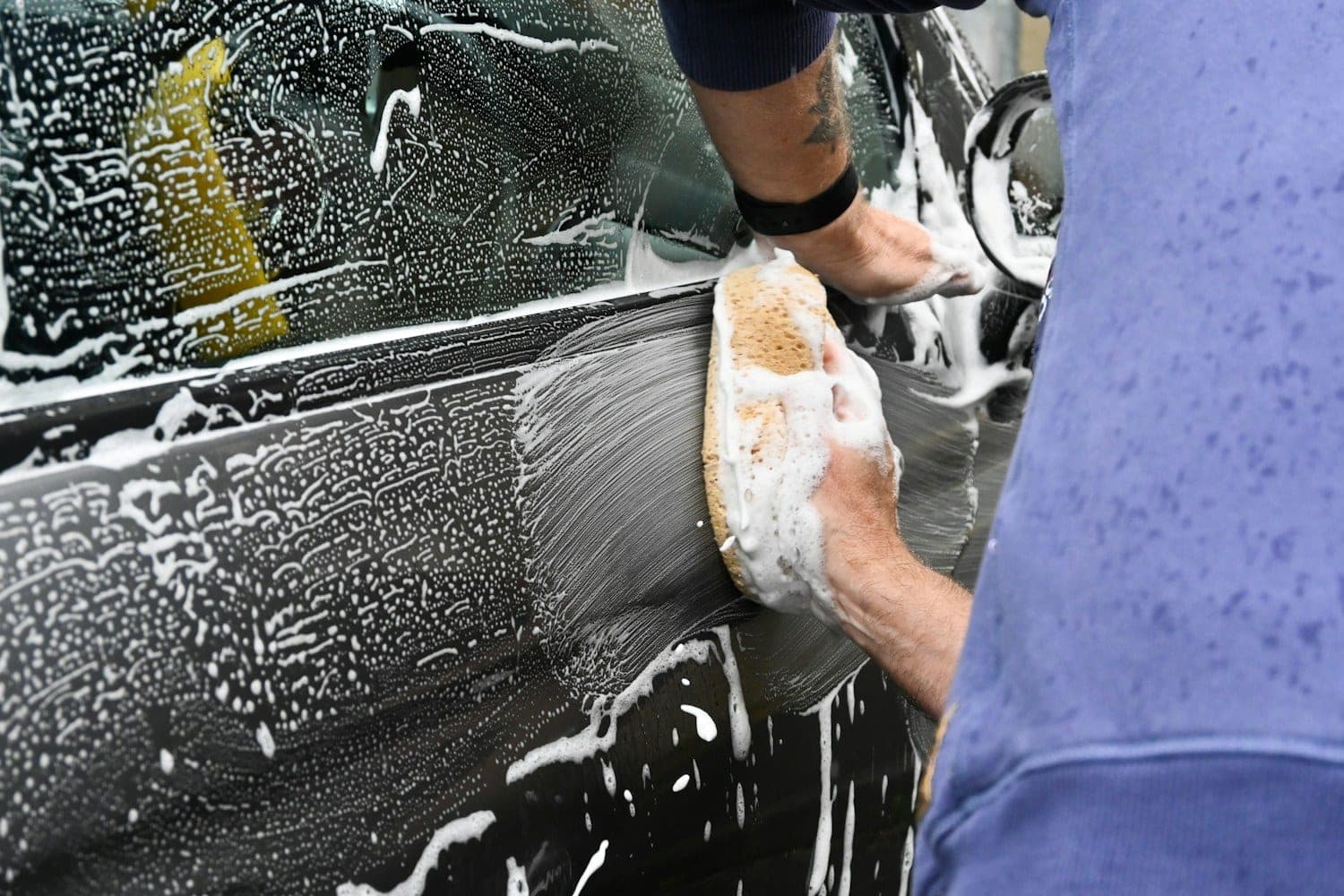
Most swirl marks are put there on wash day, by dragging grit across the paint. The two-bucket method exists to stop that.
One bucket holds soapy water and the other holds clean water for rinsing the mitt between panels, so the dirt you lift off the car is never dragged back across it. A grit guard in the bottom of each bucket traps the particles below the waterline.[8]
- 01
Work in the shade on cool paint
Sun and hot panels dry soap and water into spots before you can rinse them away.
- 02
Clean the wheels and tires first
They are the dirtiest part of the car. Use a separate bucket, brushes and mitt so brake dust never reaches the paint.
- 03
Rinse thoroughly, then pre-soak
Knock off loose grit with a strong rinse. A foam cannon or pump sprayer loosens what is left before you touch the surface.
- 04
Wash top to bottom, one panel at a time
Straight lines, light pressure. Rinse the mitt in the clean bucket after every panel, then reload with soap.
- 05
Rinse and dry straight away
Blot with a plush drying towel or use a blower. Letting the car air-dry leaves mineral spots.
Go deeper: guides in this section
04Step 2: Correct
Step 2: Decontaminate & Correct Paint
Washing removes loose dirt. It does not remove what has bonded to the clear coat: rail dust, brake dust, tar and tree sap.
Run your fingertips over a clean, dry panel inside a thin plastic bag. If it feels rough, the paint needs decontaminating before any polish or protection goes on.
- 01
Iron remover
Spray on, wait for it to turn purple as it dissolves embedded iron particles, then rinse. It does part of the clay bar's work without touching the paint.
- 02
Clay
Glide lubricated clay over the panel until it moves silently. Fold the clay often and throw it away if you drop it.
- 03
Polish
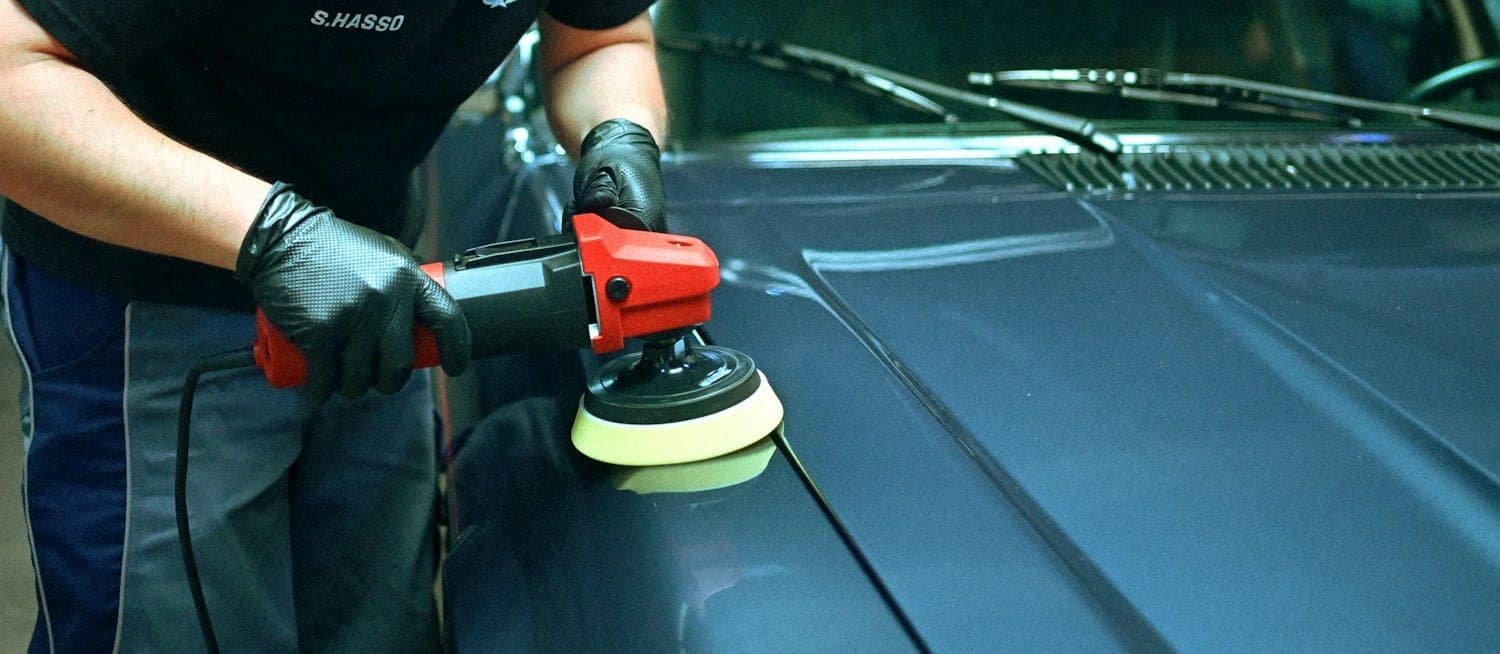
Polish removes a very thin layer of clear coat to level out swirls and light scratches. Start with the least aggressive pad and polish that does the job.
Go deeper: guides in this section
05Step 3: Protect
Step 3: Protect: Ceramic vs Wax vs Sealant vs PPF
All four put a sacrificial layer between the paint and the weather. They differ in how long that layer lasts and how much it costs to put there.
| Protection | How long it lasts | Cost | Effort |
|---|---|---|---|
| Carnauba wax | Typically 4 to 8 weeks | Lowest. A professional wax costs about $100 to $200. | Easy to apply by hand, but you reapply it often. |
| Synthetic wax or sealant | Up to 4 to 6 months | Low | As easy as wax, with fewer applications a year. |
| Ceramic coating | 6 to 12 months for spray products, several years for liquid coatings | $500 to $2,000 professionally applied, or roughly $25 to $130 for a kit | Demanding. The paint must be decontaminated and corrected first. |
| Paint protection film (PPF) | Typically 5 to 10 years | The highest of the four. Professional installation. | None for you once it is fitted. It is the only option that stops stone chips. |
Choose by how you actually look after the car. If you enjoy a Saturday with a wax pad, wax is fine. If you want to wash and go for a year or more, a coating earns its price. If stone chips on the front of the car are what bother you, only film addresses that.
Go deeper: guides in this section
06Interior
Interior Detailing
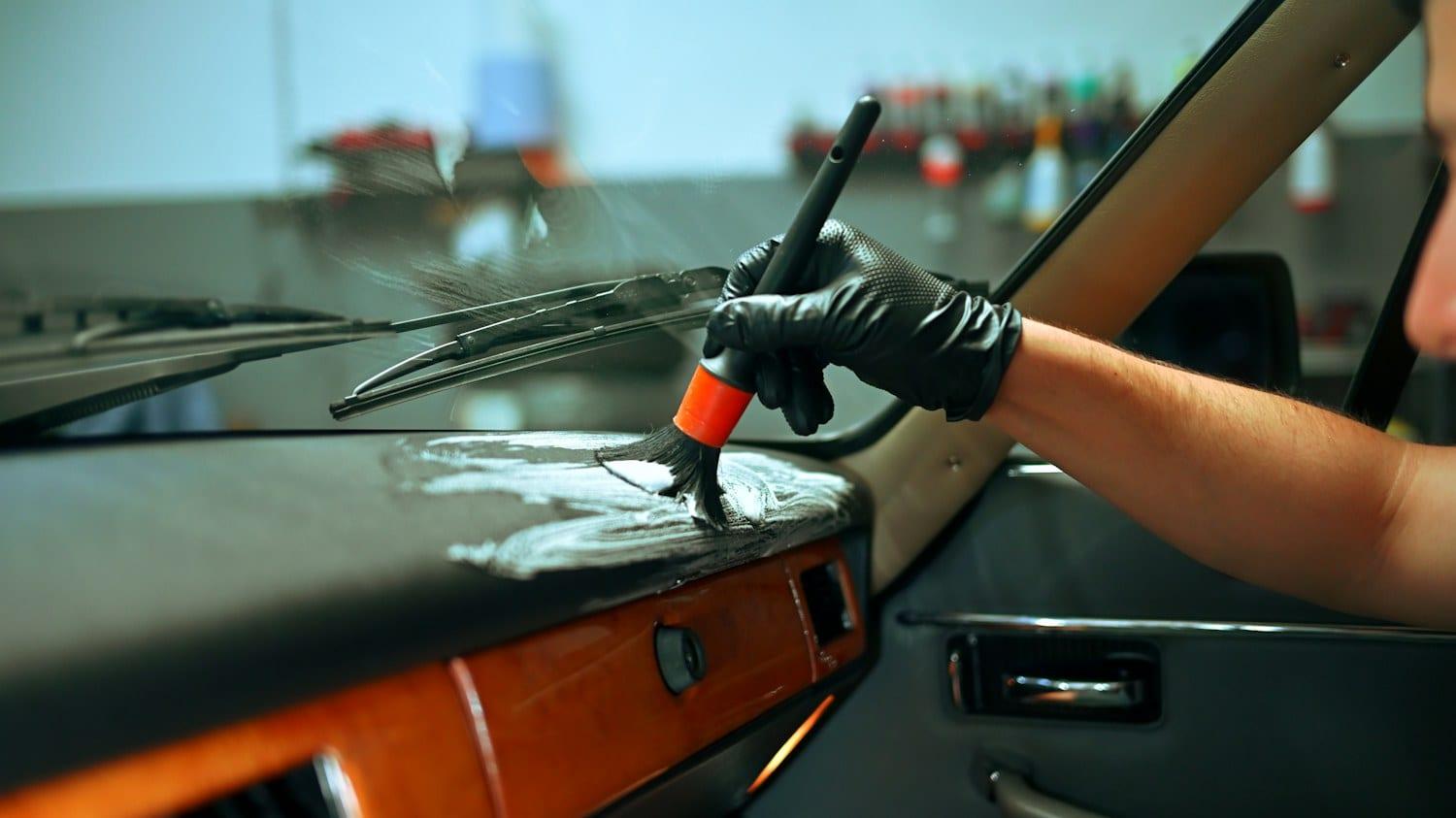
Work from the top down and from dry to wet. Dust falls as you clean, so the dashboard comes before the seats and the carpets come last.
- 01
Empty and vacuum
Remove mats and everything loose. Vacuum seats, seams and carpets, using a brush to lift grit out of the pile.
- 02
Dashboard, console and door cards
A lightly dampened microfiber and a diluted all-purpose cleaner. Use a soft brush for vents and switches, and keep liquid away from screens.
- 03
Seats
Fabric: spray, agitate with a brush, blot and extract. Leather: a dedicated leather cleaner, then a conditioner on a cool surface.
- 04
Carpets and mats
Treat stains first, scrub, then extract or blot dry. Leave doors open until everything is fully dry to prevent mildew.
- 05
Glass last
Two towels, one to clean and one to buff. Wipe the inside horizontally and the outside vertically so you can tell which side a streak is on.
Go deeper: guides in this section
07Wheels and trim
Wheels, Trim, Headlights & Engine Bay
These are the areas that make a clean car look finished. Each needs its own product and a lighter touch than most people use.
- Wheels and tires
Clean cold, never hot
Use a pH-balanced wheel cleaner and soft brushes on cool wheels. Acidic cleaners can stain bare or polished alloy. Wipe tire dressing back so it does not sling onto paint.
- Plastic trim
Restore, then protect
Faded black trim has dried out in the sun. Clean it, apply a trim restorer and keep wax off it, since wax leaves white residue in textured plastic.
- Headlights
Sand, polish and seal
Yellowing is UV damage to the lens coating. Wet-sand through fine grits, polish clear, then apply a UV sealant, or the haze soon returns.
- Engine bay
Low pressure, covered electrics
Work on a cool engine. Cover the alternator, intake and exposed connectors, use a degreaser and a gentle rinse, then dry it and run the engine briefly.
Go deeper: guides in this section
08Window tint
Window Tint: Percentages & Laws
Tint is measured by how much light it lets through, and the law in your state decides how dark each window may be.
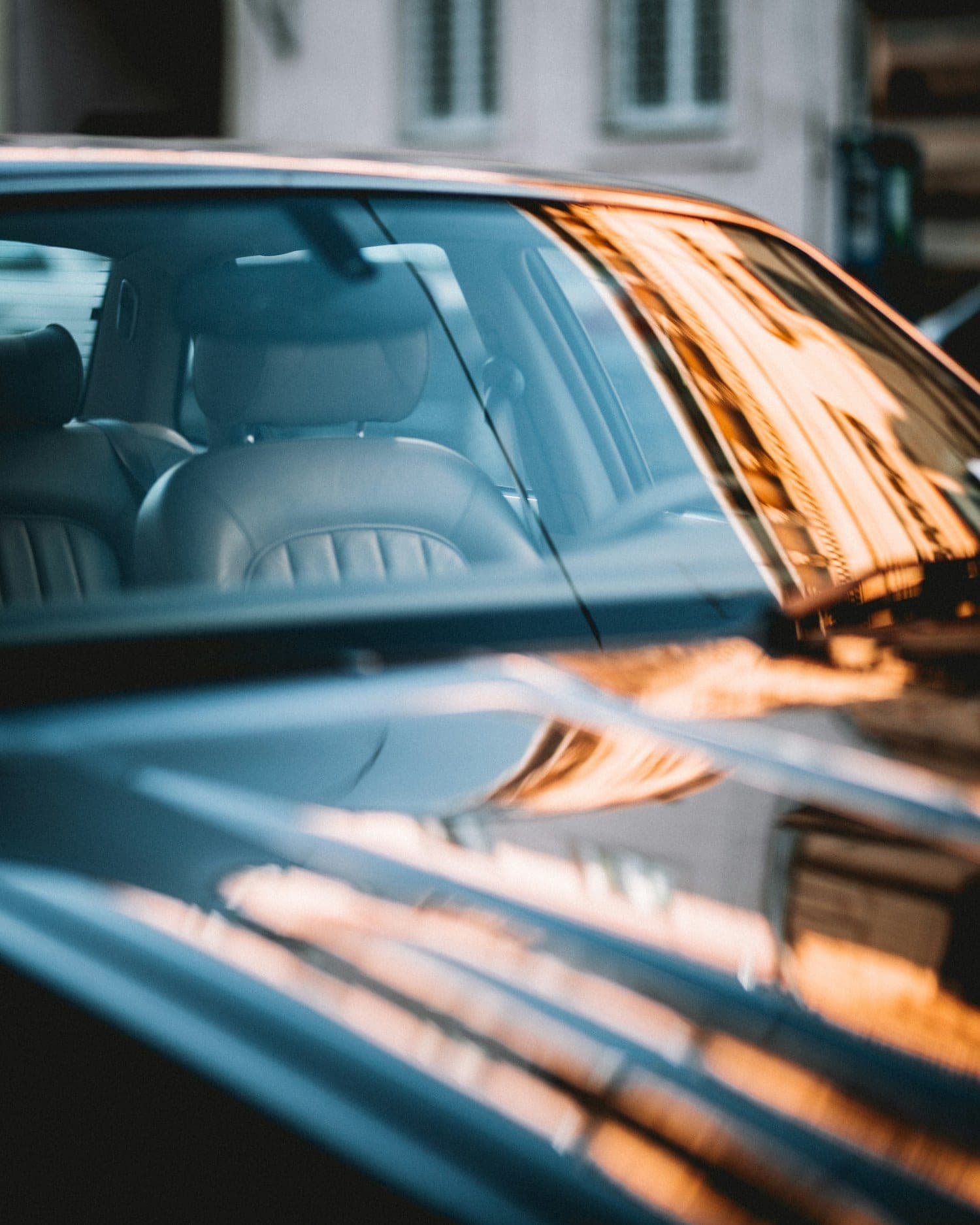
Visible light transmission, or VLT, is the share of visible light that passes through the glass.[6] A lower number means a darker window: 70 percent VLT is barely tinted, while 5 percent is the near-black “limo” tint. Limits differ from state to state and usually from front windows to rear, so always check your own state’s rules before you choose.[7]
| Film type | How it performs | Typical installed price |
|---|---|---|
| Dyed | The entry level. Less heat rejection than other types, and it can fade over time in hot climates. | $100 to $200 |
| Metalized | Metallic particles reflect sunlight instead of absorbing it, but they can interfere with radio and cell phone signals. | $250 to $500 |
| Hybrid | A dyed and metalized blend designed to reduce that signal interference. | $150 to $350 |
| Carbon | Significantly more effective at reducing heat than dyed film. | $200 to $400 |
| Ceramic | Ceramic particles block more than 99 percent of UV rays and noticeably lower cabin temperature. | Around $400 to $800 |
If your windows are tinted, clean them with an ammonia-free glass cleaner. Ammonia attacks the film and its adhesive.
Go deeper: guides in this section
09Schedule
Detailing Schedule
Little and often beats one heroic weekend a year. Dirt that sits on paint bonds to it, and a car that is washed regularly rarely needs heavy correction.
| How often | Exterior | Interior |
|---|---|---|
| Every 1 to 2 weeks | Two-bucket wash and dry. Remove bird droppings and bug splatter the same day, since both etch paint. | Shake out mats and wipe touch points. |
| Every month | Clean wheels thoroughly, dress tires, clean glass inside and out. | Full vacuum and wipe-down of dashboard, console and door cards. |
| Every 3 to 6 months | Reapply wax or sealant. Check whether water still beads tightly on the paint. | Deep-clean seats and carpets. Condition leather. |
| Once a year | Decontaminate with iron remover and clay. Polish only if swirls are visible. Restore headlights and trim if needed. | Clean the headliner, treat odors at the source and replace the cabin air filter. |
- Wash more often in winter if your roads are salted, including the underbody.
- Park in shade or a garage where you can. UV light fades paint, trim and interiors.
- Top up protection when water stops beading, not by the calendar alone.
- Keep a quick detailer and a clean microfiber in the car for droppings and sap.
10Questions
Car Detailing: Questions, Answered
How much does it cost to detail a car?
A full-service professional detail typically costs $150 to $500, depending on the size and condition of the vehicle and the services included, while a basic wash and wax runs $50 to $100, according to J.D. Power. Doing it yourself costs the price of the supplies, which you reuse.
What is the difference between washing and detailing a car?
Washing removes loose dirt from the surface. Detailing goes further: it decontaminates and corrects the paint, protects it with wax, sealant or a coating, and deep-cleans the interior, wheels, glass and trim.
Can I use dish soap to wash my car?
It is best avoided. Dish soap is designed to cut grease, so it strips wax and sealant from the paint and dries out rubber and plastic trim. A pH-neutral car shampoo cleans without removing your protection.
Do I need to clay bar my car before waxing?
Only if the paint feels rough after washing. Clay removes bonded contaminants so wax or sealant can bond to clean paint. A car that is washed regularly usually needs claying once or twice a year.
Is ceramic coating better than wax?
It lasts far longer. Carnauba wax typically lasts 4 to 8 weeks, while liquid ceramic coatings are rated in years. A coating costs more and needs the paint corrected first, so wax remains a reasonable choice if you are happy to reapply it often.
Will polishing remove scratches?
Polishing removes swirl marks and light scratches that sit within the clear coat. If you can catch a scratch with your fingernail, it has gone through the clear coat and needs touch-up paint or a body shop.
Is it safe to wash a car engine bay?
Yes, with care. Work on a cool engine, cover the alternator, air intake and exposed electrical connectors, use a degreaser and a low-pressure rinse, then dry it and run the engine for a few minutes.
11About this guide
Who wrote it, and how.
Written by
CarTipsMentor Team
Last updated .
How it is researched
Every figure in this guide comes from the sources listed below, and the guide is revised when they change.
Editorial policyGood to know
General information, not a diagnosis of your vehicle. Costs are national estimates that vary by vehicle, region and shop. Have a qualified mechanic inspect anything that affects safety.
Full disclaimerSources
- [1]J.D. Power, How Much Does It Cost to Detail A Car? (June 2023)
- [2]AAA Automotive, How Much Does It Cost To Paint a Car? (wax and ceramic coating prices)
- [3]Chemical Guys (manufacturer), How Much Does It Cost to Ceramic Coat a Car?
- [4]Chemical Guys (manufacturer), How Long Does Car Wax Last?
- [5]XPEL (manufacturer), Paint protection film FAQs
- [6]International Window Film Association, Interactive Tint Laws
- [7]AAA Automotive, 6 Types of Window Tint to Consider for Your Car
- [8]Chemical Guys (manufacturer), Two-Bucket Method Car Wash
Keep going
The other four libraries.
 OBD2 CodesLook up any code, learn what the check engine light is telling you and decide between a DIY fix and the shop.
 Used CarsCheck the history, inspect it properly, compare loans and negotiate the out-the-door price with a clear head.
 AccessoriesWhat is worth carrying in the car and what to look for in dash cams, jump starters, mounts and garage tools.
 MaintenanceService schedules by mileage, what each job really costs and the work you can safely do at home.